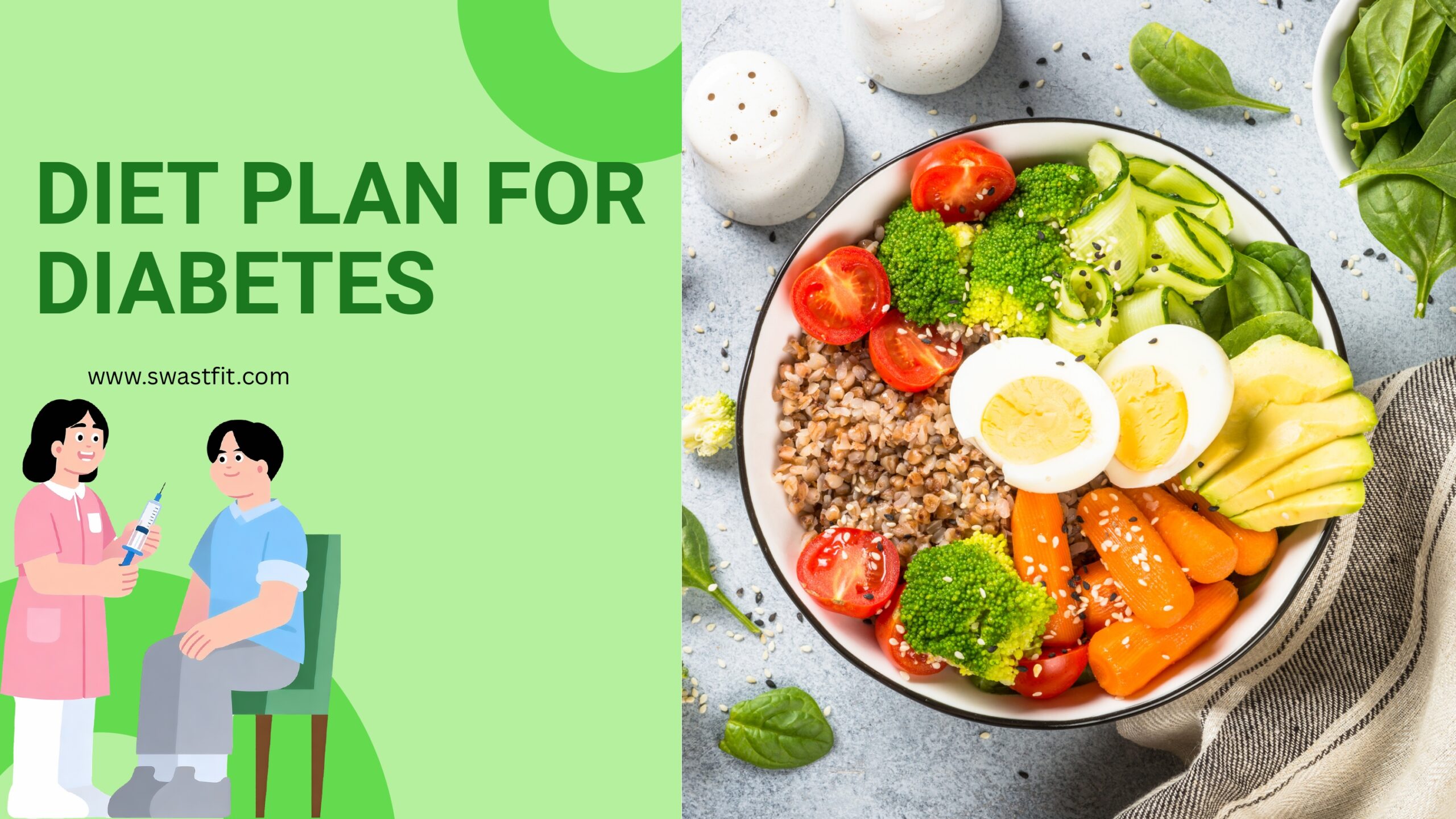
Indian Diet Plan for Diabetes:
Complete Guide for Every Indian
India has 10+ crore diabetic patients. The right food can control your blood sugar naturally. Here is everything you need to know — explained simply by a pharmacy student.

What this article covers
India is the diabetes capital of the world. Yet the right food is one of the most powerful tools to manage it. This guide covers exactly what to eat, what to avoid, a complete daily meal plan, a 24-hour health chart, and special Indian superfoods that fight diabetes — all explained simply.
What is Diabetes and Why Does Food Matter?
Simple explanation
Diabetes is a condition where your body cannot process sugar properly. When you eat high sugar or refined carb foods, blood sugar spikes rapidly. Doing this repeatedly damages your kidneys, heart, eyes and nerves over time. The right diet keeps blood sugar stable and can significantly reduce your need for medicines.
5 Golden Rules of a Diabetic Diet
Choose Low GI Foods
Low Glycemic Index foods raise blood sugar slowly. Whole wheat roti, brown rice, oats, dal and most vegetables are excellent low GI choices for daily eating.
Eat Every 3-4 Hours
Never eat large meals at once. Eat 5 to 6 small meals throughout the day to keep blood sugar stable and prevent dangerous spikes throughout the day.
Never Skip Breakfast
Skipping breakfast causes blood sugar to drop low and then spike dangerously when you eat next. Always start your morning with a nutritious meal.
Control Portion Size
Fill half your plate with vegetables, quarter with protein, quarter with whole grains. Even healthy foods raise sugar when eaten in large amounts.
Drink 8-10 Glasses of Water Daily
Dehydration raises blood sugar levels. Drink at least 8 to 10 glasses of water daily. Completely avoid sugary drinks, packaged juices and cold drinks — they are silent blood sugar killers that most people don’t realize are dangerous.
Foods to Eat — Best Indian Foods for Diabetes
These foods are your best friends
Karela, Methi, Palak
Bitter gourd, fenugreek and spinach are top diabetic-friendly vegetables. Eat freely every day without worry.
Roti, Oats, Bajra, Ragi
Rich in fiber and low glycemic index. Bajra, jowar and ragi rotis are excellent alternatives to regular wheat roti.
Dal, Rajma, Chana
Moong dal, masoor dal, chana and rajma are protein-rich and do not spike blood sugar levels significantly.
Jamun, Guava, Apple
Jamun is the number one fruit for diabetics. Guava and apple are also safe and beneficial in small daily portions.
Dahi, Chaas, Low Fat Milk
Plain curd without sugar, buttermilk without salt and low fat milk are all excellent daily choices for diabetics.
Walnuts, Almonds, Flaxseeds
A small handful of nuts daily provides healthy fats that support heart health — very important for all diabetics.
Foods to Avoid — Blood Sugar Danger Zone
These spike your blood sugar dangerously
White Rice in Large Amounts
Very high GI food. Switch to brown rice or eat white rice in small portions always with lots of dal and vegetables.
Maida — Bread, Naan, Biscuits
White bread, naan, samosa, biscuits and all maida-based foods cause immediate and dangerous blood sugar spikes.
Cold Drinks & Packaged Juices
Loaded with sugar. One glass can spike blood sugar severely within minutes. Replace with water or plain chaas.
Indian Sweets & Mithai
Gulab jamun, halwa, kheer, jalebi — all extremely high in sugar. Avoid completely or have tiny amounts rarely.
Puri, Bhatura, Pakoda, Chips
Deep fried foods raise blood sugar and worsen heart health — a double danger for every diabetic person.
Mango, Banana, Grapes
Very high in natural sugar and spike blood sugar rapidly. Avoid completely or eat in extremely tiny amounts only.
24-Hour Diabetic Health Chart
Your Complete 24-Hour Diabetes Management Plan
Follow this timeline every day to keep your blood sugar stable, energy high and health improving
Complete Daily Meal Plan
How to use this plan
This is a general guideline. Monitor your blood sugar after each meal to understand how your body responds and adjust portions accordingly. Always consult your doctor before major diet changes.
Early Morning — 6:30 AM
Start rightBreakfast — 8:00 AM
Never skip!Mid Morning — 10:30 AM
Stay stableLunch — 1:00 PM
Main mealEvening Snack — 4:00 PM
Light & healthyDinner — 7:30 PM
Keep it lightBedtime — 9:30 PM
Optional6 Special Indian Superfoods That Fight Diabetes
Traditional wisdom backed by modern science
These Indian foods have been used in Ayurveda for centuries and are now proven by modern research to have powerful blood sugar lowering properties.
Karela (Bitter Gourd)
Contains charantin and polypeptide-p that mimic insulin. Drink karela juice on empty stomach daily for maximum blood sugar lowering effect.
Methi (Fenugreek)
Rich in soluble fiber that dramatically slows sugar absorption into blood. Soak seeds overnight and drink the water every morning.
Jamun (Indian Blackberry)
Fruit, seeds and leaves all have powerful anti-diabetic properties. Jamun seed powder from ayurvedic shops is especially effective.
Amla (Indian Gooseberry)
Rich in chromium which significantly improves insulin sensitivity. Drink fresh amla juice daily for consistent blood sugar control results.
Dalchini (Cinnamon)
Add small amount to tea or food daily. Multiple studies show it improves insulin sensitivity and lowers fasting blood sugar effectively.
Haldi (Turmeric)
Curcumin in turmeric reduces inflammation that worsens diabetes. Add to milk, dal or vegetables every single day without fail.
8 Important Lifestyle Tips for Diabetics
Monitor blood sugar regularly — at least twice daily when starting a new diet plan to understand exactly how your body responds to food
Walk 30 minutes daily — even a simple walk after meals significantly helps lower blood sugar levels naturally without medicine
Never stop medicines without doctor advice — diet helps manage diabetes greatly but your prescribed medicines are equally important always
Read food labels carefully — sugar hides in packaged foods under names like corn syrup, dextrose and maltose — always check before buying
Cook with minimal oil — use mustard oil or olive oil instead of vanaspati or dalda butter for healthier everyday Indian cooking
Eat slowly and chew properly — slow eating helps body process sugar more efficiently and naturally prevents dangerous overeating
Manage stress every day — high stress releases cortisol hormone which directly raises blood sugar levels even without eating anything
Sleep 7 to 8 hours daily — poor sleep directly affects insulin sensitivity and makes blood sugar control significantly harder the next day
Frequently Asked Questions
Yes, but in small portions. Prefer brown rice over white rice as it has more fiber and a lower glycemic index. Always eat rice with plenty of dal and vegetables to slow down sugar absorption. Never eat plain rice alone.
Not all fruits are bad. Low GI fruits like jamun, guava, apple and pear are fine in small daily portions. High sugar fruits like mango, banana and grapes should be avoided or eaten in very small amounts only on special occasions.
Generally 4 to 6 whole wheat rotis per day spread across meals is acceptable for most diabetics. This depends on your blood sugar levels, medicines and physical activity. Always consult your doctor for personalized advice specific to your situation.
Plain tea or coffee without sugar is completely fine. You can use a small amount of stevia which is a natural sugar substitute if you need sweetness. Completely avoid tea or coffee with sugar, condensed milk or any flavored syrups.
Diet alone cannot cure diabetes but it can significantly help manage and control it. In some Type 2 diabetes cases, proper diet and lifestyle changes can reduce dependence on medicines. Always work with your doctor for the best treatment plan for your unique situation.
Take Control of Your Health Starting Today
Managing diabetes with the right Indian diet plan is completely possible. You do not need to give up all your favourite Indian foods. You just need to make smarter, science-based choices every single day. Start with small changes, follow the 24-hour plan, and build healthy habits over time. Your health will improve — guaranteed.
1 thought on “Indian Diet Plan for Diabetes:A Complete Guide for Every Indian”