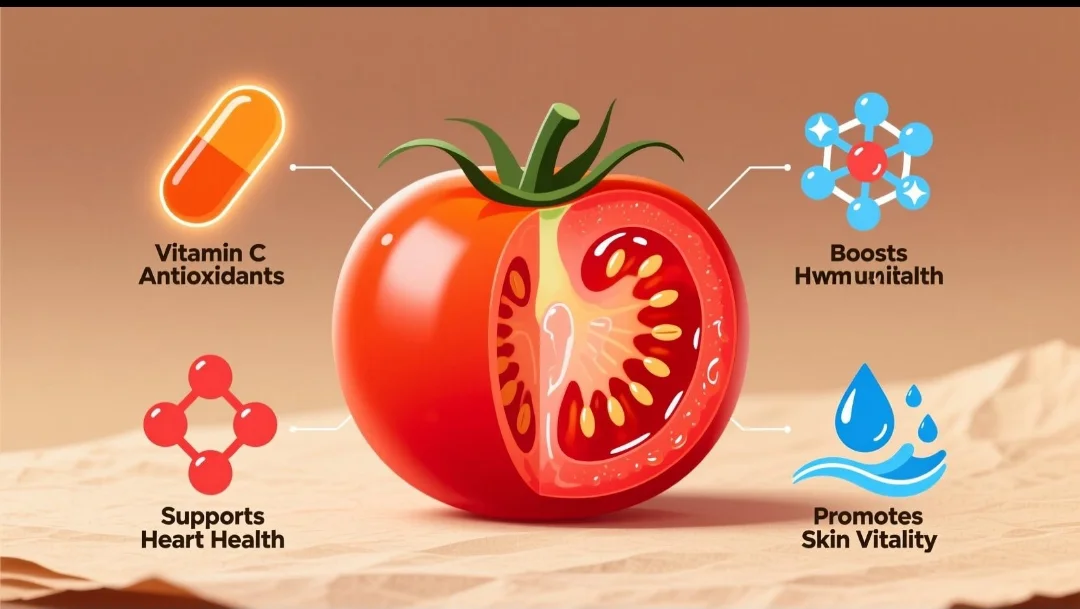
Tomato: 10 Amazing Tomato Benefits

Fresh ripe red tomatoes and tomato puree in steel katori — complete lycopene nutrition investigation for Indian cooking myths busted by SwastFit 2026

India throws tomatoes into every curry base and assumes the cooking destroys their nutrition. The clinical evidence says the exact opposite: a study in the American Journal of Clinical Nutrition found tomato paste has 2.5 times more bioavailable lycopene than raw tomatoes, cooking increases total antioxidant activity by up to 62%, and adding oil quadruples lycopene absorption. This investigation also addresses the kidney stone belief that causes millions of Indians to avoid tomato unnecessarily — a peer-reviewed study published in the Indian Journal of Urology found tomato juice may actually prevent the most common type of kidney stone through its citrate content, and explicitly described the widespread Indian belief as a misconception common even among general practitioners. The nightshade-arthritis claim is assessed against the full clinical record — that record contains zero large-scale placebo-controlled trials confirming it. Complete with full USDA nutrition data, 10 evidence-based benefits with long detailed explanations, 4 myth investigations with cited primary sources, 5 side effects with specific populations, 6 FAQs, and the definitive verdict on raw vs cooked vs tomato paste for Indian kitchens.

10 Pumpkin Seed Benefits: Why You Should Eat Them Daily

10 pumpkin seed benefits. Green pumpkin seeds kaddu ke beej — richest plant source of zinc and magnesium, complete nutrition guide for Indians 2026 by SwastFit

10 Pumpkin Seed Benefits: Why You Should Eat Them Daily. Every Indian kitchen throws them away. Every time someone cooks kaddu ki sabzi or kaddu ka halwa, the seeds — along with their stringy flesh — go directly into the bin. This complete investigation shows what pumpkin seeds actually contain at a molecular level: 30g of complete protein per 100g, 592mg of magnesium (the highest of any common seed), 7.81mg of zinc (one of the richest plant sources available), and tryptophan, the amino acid that your brain converts into serotonin and then melatonin. It covers the clinical trial with 1,431 men that tested pumpkin seed extract for prostate health, the precise daily dose (28g — one small handful), five practical ways to eat them in an Indian kitchen, and the side effects and drug interactions you need to know about. Researched from primary sources — USDA nutrient data, PubMed-indexed trials, ICMR guidelines — not recycled wellness content.

Rice Nutrition Arsenic Truth, Diabetes Risk & Varieties Explained (2026) | SwastFit

Bowl of cooked rice with raw paddy grains — investigation into rice nutrition, arsenic levels and diabetes risk for Indian diets

Most websites claim Sona Masoori has a glycemic index of 51. The only published clinical trial found puts it at 72. This documentary-style investigation traces rice from its 9,000-year-old origins to the real science behind India’s most argued-about food — covering arsenic testing data specific to Indian basmati and West Bengal groundwater, the actual GI numbers for six major Indian rice varieties, and what population studies genuinely say about rice and diabetes risk. Researched and written with primary sources, not repeated marketing claims.